Sustainable Structured Maize Markets
through Private Sector Partnerships
Programme
Sustainable Structured Maize Markets
through Private Sector Partnerships
Programme
raised funds70%
70% raised
$10,000 (goal)
Project Description:
Inception of Sustainable Structured maize market through Private Sector Partnership Project for 8,200 smallholder farmers in Babati, Mbulu, Kiteto, Karatu and Hanang` of Manyara region funded by Agricultural Market Development Trust (AMDT) and coordinated by Farm Concern International.
Sub Grantee Name: ESAT
Sub Grantee Role in the Project:
Training on awareness and integration of roles of women, men, young women and men leading to economic empowerment and development
Grant Amount (in $): $ 39,154 Start date of Project: 01 st April 2019 Closing date of Project: 30 th June 2019
Overall Summary
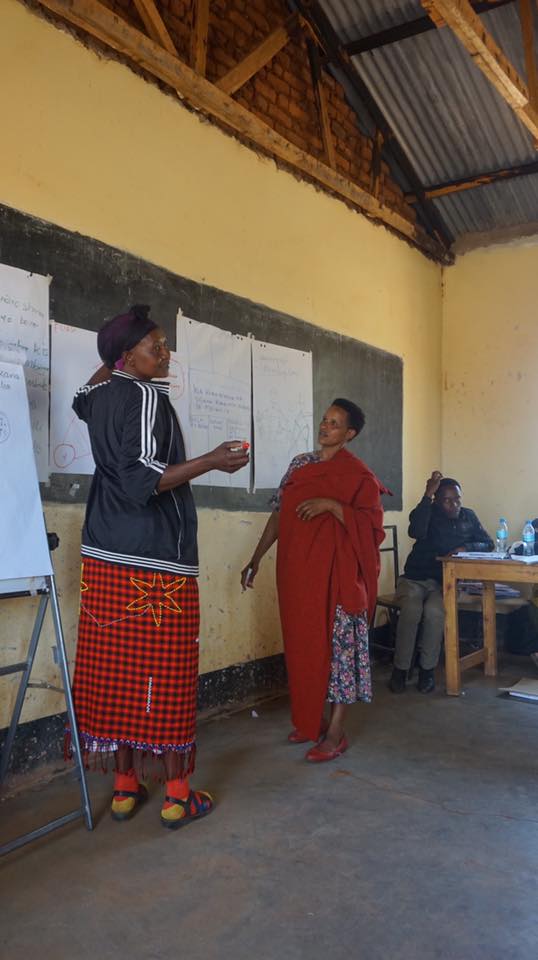
FCI sub granted ESAT to train 287 Leaders & Lead Farmers from 41 FOs in Manyara region on awareness and integration of roles of women, men, young women and men leading to gender balance, economic empowerment and development. ESAT has experience of using GALS tools in breaking through gender-based barriers at individual level and changing gender inequalities within the family as challenges which prevent both women and men from achieving their vision. GALS is a community-led empowerment methodology which aims to give women as well as men more control over their lives and catalyse and support a sustainable movement for gender justice. Addressing first the things which are most immediately under peoples’ own control forms the basis for identifying priorities and strategies for longer term change at wider community, institutional and macro-levels. In this methodology, women and men develop their individual visions for change, with achievable targets and road maps to move towards these visions, based on analysis of their current situation, past achievements and opportunities/strengths and challenges. In April, 63 participants from Karatu and Mbulu District Council were selected and invited for 3-day workshop whereby 59 participated and planned for outreach to their communities. For May, 46 participants from Hanang`District were invited for the GALS training and 44 (on average for the 3 days) which Is 95% showed up. This month, 46 participants came for the training and so making the total trained to be 149 (85 Male and 64 Female). The selected champions were invited for a 3-day introductory workshop called Catalyst Workshop. These workshops all began with an overview presentation about GALS methodology. The facilitators then introduced basic tools including Visioning, Vision Journey, Gender Balance Tree, Empowerment Leadership Map and a little on the distinctive GALS facilitation methodology. The workshop utilized various methodologies like plenary discussions, pair wise, buzz groups, mentorship, energizers and songs all of which stablishes local cultural innovations and support peer sharing. With the Gender Facilitator there were also three Co-Facilitators from previous processes (one from Hivos` Coffee Partnership for Tanzania project in Same, Kilimanjaro region and two from Uniterra`s Gender and youth within horticultural sector project in Dirim Village, Manyara region) invited to share experiences so as to catalyze the change. At the end of these workshops, each participant was a catalyst for an exponential process and so identified 5‘easy people’ in their communities to discuss about the methodology. Even on a conservative estimate of 1 champion to 5 people reached in their immediate family, if each of these people also reaches 3 people, those 3 people another 3 and so on, then from the same amount of champion effort one can have for example:
Month 1: 1 to 5 to 15 Month 2:15 to 45 Month 3: 45 to 135 Ultimately at the end of each gender catalyst workshop the following was achieved:
a) Individual life and livelihood planning b) Institutional awareness-raising and changing power relationships c) Collective action and gender advocacy for change